Showing posts with label version. Show all posts

Tuesday, November 14, 2017

Dragon Ball Z: Budokai Tenkachi 3 Review - The third wave of the 360° movement

Release(s):
                 October 4, 2007 (Japan)
                 November 9, 2007 (Europe)
                 November 13, 2007 (North America)

Platform(s): Playstation 2, Nintendo Wii
Genre(s): Fighting
Developer(s): Spike
Publisher(s):
          Bandai (Japan/Europe)
          Atari (North America)
Player(s): 1-2


Overview

Dragon Ball Z: Budokai Tenkaichi 2 was in improvement from the first game in just about every way thus leading to become a fan favorite and it received slightly better reviews as a result, but the sales still continue to dwindle. Spike then has decided to pull out all the stops In order for the series to fully escape the shadow of the much more successful Dragon Ball Z: Budokai titles. With a huge marketing campaign and a roster boasting of 160 characters total (including transformations and fusions)... was it all worth it in the end?


Gameplay


Once again the innovative combat system from the last two games. However, Tenkaichi 3 is not the massively overhaul that Tenkaichi 2 is from the first game (not that was even needed) but it still does a lot to improve the combat for a much deeper, more refined experience. Characters now automatically lock onto their opponents so moves designed around fucking around this feature aren't nearly exploitable. Smash Attacks can also done teleporting briefly towards the opponent by charging it then releasing it the moment your character flickers bright to confuse opponents. Several character specific combos have also been added as well as several more button mashy combos from the last game being fixed or removed.

Along with the new offensive moves, tweaks, and character specifics... new defensive maneuvers and movement options have been added. A new dash mechanic called Z Burst Dash can performed during the standard Dragon Dash to travel at much greater speed and move around the stage to appear behind the opponent. Super Guard has been replaced with Sonic Sway which is similar to the counterattack combo chain only this move makes you automatically your opponent's melee combo if it connects draining their ki and smack them away. Not a huge loss though as rush Blast 2's are no longer unblockable... though they still can break an opponent's guard thus making them lose ki. A new counter move has been added called Z Counter which is difficult yet very satisfying to pull off. It allows you to teleport behind the opponent like the defensive teleport to knock them away but unlike said teleport, Z Counter costs some ki and has to timed exactly when the opponent attacks (it's also only effective against melee attacks).

Lastly, the AI has been improved drastically. They now actually provide a reasonable challenge.


Content


With another DBZ game comes yet another new single-player campaign. For this game it is called Dragon History and it goes back to it's roots of simply going from one scenario to another. However, this mode does something different from the others before it as it actually makes you feel like you're in a battle from the show by having the characters exchange dialogue during gameplay and events are predetermined. You also play as the villains occasionally when they win in the actual story instead of beating around the bush by sticking you with the losing heroes this time. On paper this mode sounds great but the execution leaves much to be desired. Firstly, while some may have found the Dragon Adventure in Tenkaichi 2 too long, Dragon History is also too short. Many key battles are mysteriously left out and the whole thing can be completed in 6 hours. Also once you're done with it there's not much reason to bother playing it again except maybe to collect the dragonballs. Most of the characters are already unlocked. Dragon History does promise alternate paths which you can discover during battle but it doesn't take advantage of that concept and there's no reward for it either. At most you just get a different (underwhelming) cutscene at the end.

Tenkaichi 3 also has it's own take on the Ultimate Battle mode from the previous games. The main course here is the Mission 100 where you fight up to 100 different battles against sets of opponents based on a certain theme and they all have different rules. The others challenges are Sim Dragon which is a battle simulation where you are to prepare for a fight in 10 days (the cycle must be completed 10 times without losing) and Survival which is pretty self-explanatory. There is also a feature exclusive to the Playstation 2 version (to make up for the lack of Netplay) called Disc Fusion where you can play through the Ultimate Battle from the first Tenkaichi and Ultimate Battle Z of Tenkaichi 2 if you have working discs of the respective games. Pretty gimmicky if you ask me.

The World Tournament mode has also been changed drastically and is now called Dragon World Tour. It is sectioned off to two sub-modes which are World Tour where you get unlockables but it only allows one player and a tournament is only open at a certain time, and Free where you can mess around with friends. Aside from the that, the 3 tournaments from the last game have returned plus two new ones which are the Otherworld Tournament which is pretty much the Big Martial Arts Tournament except you fight Pikkon in the end instead of Hercule and the Yamcha Game which is pretty much the same deal except your character is randomly selected for you (something the game even acknowledges is stupid).

Training mode is just as barebones as ever with the tutorial (Battle Training) going back to teaching you mostly through cryptic text. Also, as I hinted before the Wii version of this game offered online play though it suffered majorly from lag so it's not a huge loss for PS2 players. The Character Encyclopedia from Tenkaichi 2 has been reduced to just Character References where you look at character bios and their models.

Evolution Z has returned but the customization setting has been revamped to be much more balanced. Character stats can't be beefed up massively like in Tenkaichi 2 and the level up system is gone. Each character start off with a certain amount of slots but can increased up to 7 by generating more with Z-Points (this game's currency) and items can take more than 1 slot depending on their effects. The real upsides to this revamped system is that a bunch of more useful ability improving yellow Z-items have been added, the redundant Z-Item Fusion has been removed, and the Item Shop has been streamlined so you don't have to buy the same item more than once. Once you buy said item it will be available for every character and you don't have to deal with the membership card silliness.  

The Data Center still allows you to insert custom characters via password but you can also view recorded battles from the Dueling mode with Action Replay.


Graphics


Just like the gameplay, the graphics for Tenkaichi 3 isn't massively different from the last game though I would say the character models do appear less block this time. One thing I do have to say is the beams, auras, particle effects, etc. look a lot better in this game. It has much more pizzaz and resembles the anime more closely.


Sound

Once again the voice clips and sound effects are recycled from the last game barring cutscenes, menus, and of course the new characters. More sound effects from the show have been picked up though,

Just like the last game, the Japanese version has remixed tracks from Shunsuke Kikuchi's soundtrack for the original anime series while the international versions of the game gets another original soundtrack by Toshiyuki Kishi. It's not as good as the soundtrack for Tenkaichi 2 but it does it's job well enough plus a few memorable tracks.


Aesthetics


In terms of storytelling in Dragon History, it also falls flat. It's done through in-game cutscenes but the characters are limited to their standard animation during gameplay thus leading to some really awkward scenes like Gohan tagging in just to have Piccolo die at Nappa's hands. It's a  shame that Dragon Ball Z: Budokai, a game that predates this one by 5 years, completely shits all over it while basically doing the same thing.

Storytelling aside though, the look and feel during combat has improved greatly. Every sequence is much more dynamic, all the ki blast attacks feel painful, and all supers/ultimates are catastrophic. it also uses more visual cues from the anime overall.

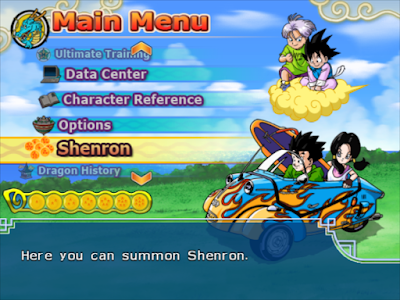
The menus also continued to get better and better. The character select screen now makes perfect sense (no 'up is down and down is up' mess), the dialogue is more memorable, more bells n' whistles, and there are more than one mini-game during the loading screen (dat loading time tho...).


Overall

Just when you thought Spike was done they still managed to impress with their third installment in the Budokai Tenkaichi series. However, I can't help but feel they have hit a wall with this title.

Now this game gets an 8.1 out of 10...   

Friday, February 3, 2017

Tekken 4 Review - Step into the next millenium

Release(s):
    March 28, 2002 (Japan)
    September 13, 2002 (Europe)
    September 23, 2002 (North America)
Platform(s): Arcade, PlayStation 2
Genre(s): Fighting
Developer(s): Namco
Publisher(s): 

    Namco (Worldwide)
    Sony Computer Entertainment (Europe)

Player(s): 1-2


Overview

With three games and one non-canonical title under it's belt, Tekken has proven time and time again it can hang with the big boys of the fighting game genre. The true fourth installment was also in the makings and was set to be released in 2001 for arcades... to make way for a new era of fighting in the 21st century. Just how far does it take this re-revolutionary movement with 3D fighters? Let's find out...


Gameplay


Once again the award-winning 3D fighting from previous Tekken games have return so that's good but there are a couple fundamental changes that makes this game stand out. For one you can't jump backwards or vertically... you can only jump forward which isn't a big loss but it's something you'll notice when it's gone. A new grab move which allows you to shift your opponent to a more favorable position and it's done by pressing LP + LK of which the secondary attack grab is supposed to be. A couple other control schemes have been made but the biggest change Tekken 4 makes of the combat system is that for the first time ever, Tekken takes full advantage of the 3D fighting concept by actually having you fight on a 3D plane instead of an illusion of one. You can use the environments to your advantage by slamming your opponents to walls or trapping them into stage obstacles on uneven terrain stages forcing a slower and more strategic approach to combat. Now, I understand why Namco would make such changes and a couple of these concepts are quite good but at the same time they are alienating to long-time fans.

The new fighting styles are also a mixed bag. For example, Jin Kazama no longer fights with a mix of the Kazama Style Traditional Martial Arts and Mishima-ryu in favor of traditional karate which makes him his own character now but he is really OP in the game notably due to his Laser Scraper move. Tekken 4 brings in new characters with completely unique movesets like the Vale Tudo fighter Craig Marduk who uses a grappler style not quite like no other (especially with his tackle) but his moveset just feels... incomplete. Though on the positive there's also the british boxer Steve Fox who, instead of using his additional punch attacks for his kick buttons like most fighting games would for boxing character, uses he left and right sway dodges for the LK and RK buttons which makes him an especially fun character to master. Lastely there's Combot... an ever-so-pointless replacement for Mokujin who instead of switching to a different character's fighting style each round he does it after an entire match. 


Content


All the game modes from Tekken 3 have returned for Tekken 4 but one in new game mode this game introduces which also becomes a staple in the Tekken series from then on is Story Battle. Story Battle is just like Arcade (Arcade Battle) only it actually goes out of it's way to tell the story of Tekken (which honestly makes Arcade rather redundant). You will fight 6 randomized characters then a possibly character-specific sub-boss and Heihachi Mishima as the final boss... though some character's stories may play out differently and will unlock a specific character (if they aren't already). Another player can't attempt to challenge you so they can take over like Arcade Battle.

The Tekken Force mode in Tekken 4 has received something of an upgrade from Tekken 3 as it takes full advantage of the whole interactive environment mechanics within the game's combat. You can also lock-on manually to an enemy instead of automatically locking onto the closest enemy and losing no longer means a game over (though you lose your total score from previous stages... not that it means much in the end) but the actual difficulty has increase with enemies potentially attacking you at every corner even during his boss fights. Speaking of boss fights... they are no longer character-specific... every character in the end of each stage will face Combot, Kuma/Panda, Kazuya, then Heihachi. 

Aside from that stuff there's a mode called Training which determines how fast you can input each character's bread-and-butter moves, and you can record a battle by pressing the select button at the end of the match and it can be viewed within the Theater mode. You can now pause in Time Attack mode and Survival mode.


Graphics


At a glance there's not much of a difference graphically between the Playstation 2 port of Tekken Tag Tournament and Tekken 4 but Tekken Tag was already a great-looking so it's not really to be taken as an insult. I suppose Tekken 4 looks sharper is especially evident with the stages naturally as they're now part of the gameplay experience and there's no sign of slowdown like what happens with Tekken Tag sometimes. There are no longer any character-specific stages however...


Sound

Almost all of the voice actors/actress have once again reprise their roles for Tekken 4 and they sound better than ever before. What's even cooler is that for the first time ever in a Tekken game the characters finally have actual dialogue instead of just making battle grunts and occasional laughs. Some voices are questionable like Marduk's battle grunts which are like weird animal growls but overall they do a good job. The soundtrack for this game also shows quite a drastic change in style to reflect with the changing with the times. The synthesized music is now largely downplayed in favor of a techno/rock mix and there are no character-specific themes for the stages. The soundtrack also isn't remixed for the console port like previous games but that aside... the soundtrack is still head-bobbingly good nonetheless. 


Aesthetics 


Like I said earlier Tekken 4 actually goes out of it's way to tell the story through the Story Battle mode including text-based prologues and epilogues so you aren't just left guessing what happens. Each character still has their ideal endings after completing Story Battle but also like I said earlier this game features dialogue and the endings themselves have much more relevance to the main story so most of them actually feel like they're telling a legit story instead of basically being slideshows. As for the story itself... Kazuya Mishima has mysteriously came back from the deadwhich is bullshit thanks to G Corporation and is out for revenge against Heihachi for foiling his plans while Jin Kazama, who now has a deep hatred for anything related to the Mishima bloodline after Heihachi's betrayal (including his lineage, his fighting style, and the Devil Gene within him), is out for the same thing so Heihachi had announced the 4th Iron Fist Tournament to lure both of them out so he can claim the Devil Gene for himself. There are some other cool twists to the story as well like the once respected and feared Vale Tudo fighter Craig Marduk being responsible for the death of Armor King (King's mentor) which lead to him getting an invitation to the Iron Fist Tournament despite being charged with manslaughter, Steve Fox trying to discover his real parents while ducking the Mafia (whom may not be quite what they seem), and Ling Xiayou getting involved in the complicated history of the Mishamas to reunited with her schoolmate Jin and discover the truth to Heihachi's intentions.


The game's interface is significantly improved from previous games like each game mode in the main menu given a description and a mini screenshot to give you an idea of what it's about, and the screen transitions have actual flare to them rather than them simply going to the next screen. This is also a clear move to the next millennium.


Another thing I must add is that the character also speak their native language (like the Mishimas and Jin speaking Japanese, Hwoarang speaking Korean, etc.)... though some characters (like the replacement Capoeira fighter Christie Monteiro and Nina Williams) who are foreign don't even have a discernible accent when they should... but that's no big deal.


Overall

What can I say about Tekken 4? It's a black sheep alright and it's a damn good one at that! It may not be the best in terms of gameplay (even though it has some REALLY good and even revolutionary ideas) but you can't deny it's done a lot of good in terms of aesthetics and content.


Overall I give this game an 8.6 out of 10.

Thursday, November 3, 2016

Tekken 3 Review - A Year Later... A Few Months After

Release(s):
    March 26, 1998 (Japan)
    April 29, 1998 (North America)
    September 12, 1996 (Europe)
Platform(s): Arcade, PlayStation 
Genre(s): Fighting
Developer(s): Namco
Publisher(s): 

    Namco (Worldwide)
    Sony Computer Entertainment (Europe)
Player(s): 1-2


Overview

As I've said in my review of Tekken 2, that game turned out to be an even bigger critical and commercial success than it's predecessor. Not only did the Playstation port sell over twice the amount that the first game did, Tekken 2 was given several accolades from major video game journalists as among the best video game ever and was the #1 most-played arcade game for several months straight (considering how big arcades were at the time, this was saying a lot). This officially established Tekken as a household name among other big-name fighters such as Street Fighter and Mortal Kombat. The most logical step for Namco to take would be another sequel leaving players waiting as they shit their pants in anticipation for how far Namco can take their new hit series.

Gameplay

Once again Tekken 3 returns with the award-winning 3D combat system from the first games and just when people thought Namco couldn't take things even further, they did. One thing is that the sidestepping mechanic has been fully implemented for every character and they also have several moves that are tied to it including a powerful, inescapable throw from either the opponent's left or right just you can do from their backs. Characters now jump at realistic heights rather than 30 feet like they do in the first two games making aerial more easily controllable. Recovery time when down is now instantaneous keeping the flow of combat constant. The controls are even more tight and fluid, there's more ways counter, and there's even more diverse fighting styles.

Speaking of styles.... most characters from the first two games have been removed so defamiliarization of those games is a must for this game especially since while several characters may share likeness to the one they've replaced notably Jin Kazama (the bastard son of Kazuya Mishima and Jun Kazama), who is like mixed pot between the Advanced Mishima Style Karate and Kazama Style Traditional Martial Arts, they have enough of their own moves to set them apart.

The AI has been toned down considerably from the first two games now providing a reasonable challenge for newcomers and there is no instances of cheap difficulty 
spikes... well, it actually does get harder as you go along but it never feels overwhelming. One could argue Namco may have made it too easy but in any case, it's at least much more adjustable.

Content

All of the game modes from Tekken 2 have returned but the Arcade Mode has a different method for unlocking characters. Instead of playing through it with a specific starting character to unlock a specific hidden character, it's now determined by how many characters you've completed Arcade Mode with and the last character you will unlock is the of course, the final boss... Ogre and then it's transformed state True Ogre. The options for Practice Mode was been extending massively from the last game.

Everything you can do in Practice Mode from Tekken 2 is here but you can make the computer dummy perform various actions such as crouch, guard in standing and/or crouching positions, perform a quick roll while laying on the floor, or even have another player take control. You can also have the computer act as a fighting opponent of varying difficulty (deja vu) and all these are sectioned to three modes called "1P Freestyle" where you can basically do whatever (evident from the title), "VS CPU" where you fight the dummy as if it were an opponent, and "Combo Training" where the game helps you perform more complicated combos. There's a few options encompass the whole Practice Mode such as the "Hit Analysis" which makes the characters green but blinks red whenever they are completely vulnerable and the "Attack Data" like in Tekken 2 only in 3 you can see the total amount of damage both characters have dealt to each other throughout the whole session. Unfortunately, the replay feature is just as unreliable as in Tekken 2 but at least now the game doesn't boot you back to the main menu for keeping it idle.

Tekken 3 introduces a mini-game called Tekken Force Mode of which you select a character and fight your way through a bunch of generic mooks beat 'em up style but with Tekken controls. There's a total of four stages each one ending with a boss depending on the character till the last stage where you fight Heihachi Mishima (except Mokujin). This mode is hella fun and if you manage to beat it three times you will get a chance to fight Doctor Bosconovitch then unlocking him if you win but be careful, because if you lose then it's gameover. You can also gain points based on well you do but they're completely inconsequential.

There's also another a mini-game called Tekken Ball Mode only this is unlocked through completing Arcade Mode with all the starting characters. In this mode you select a character then play against another player or the computer in a game of volleyball but with Tekken controls as well and your goal is to dwindle down your opponent's health by either sending the ball to their side of the court or hitting them with the ball directly. You have the choice of three beach balls (two of which are unlockable)... a beginner ball which can do up to 40% damage, an expert ball which can do up to 60% damage, and a grand master ball which can do maximum damage... the amount of damage that the ball can do is represent through a parameter that builds up from landing successive hits. This only works for certain attacks, however... surprisingly this mode works as well.

For the first time in non-Japanese versions, a mode called Theater Mode will also appear after you've completed Arcade Mode with all the starting characters. Here you watch opening sequences for the game and the endings for the characters you've completed Arcade mode with. If you get all of them, you gain the option to listen to the game's soundtrack (both arcade and remixed) in the music section or load the endings/music of the first two games in the disc section.

Graphics

The graphics just keep getting better and better. The character models and animation are significantly detailed than they were in the first two games plus the backgrounds don't clash so much with them along with the environments like they used to. Unfortunately, there isn't nearly as many unique stages for each character as there are in Tekken 2. With the exception of Heihachi, Ogre, Bosconovitch, and Gon (who is unlocked through Tekken Ball Mode after beating him) all the hidden characters have stages shared with the starting characters.

Sound

The voice work has been given a major overhaul from the first two games with several familiar voices thrown into the mix notably the late Daisuke Gōri as Heihachi Mishima (who voices him from the anime adaptation to Tekken 6 before his passing, rest in peace... champ). They still only make battle grunts (with a few exceptions) but at least now they doesn't awkward as they did previously. The soundtrack however doesn't hold a candle to the one in Tekken 2 but it's still got the great classic arcade synthesized feel to it.... though personally I prefer the arcade tracks over the rearranged tracks here for the most parts.

Aesthetics

The lore behind Tekken 3 isn't as strong as the one in Tekken 2 either but there's still plenty of interest within it. 19 years have past since the 2nd Iron Fist Tournament and Heihachi had reclaimed his throne from his (literally) demonic son Kazuya, who he threw into an erupting volcano (no way that sucker's making it out ali... shit), but something strange has happened. Many of the world's greatest fighters are gone with most of the absences being linked to the ancient being from Mexico named Ogre, who robs fighters of their abilities by attacking them, and Heihachi announces the 3rd Iron Fist Iron Fist Tournament to lore him out (best expect there'd be an ulterior motive behind it). Some of the fighters from the previous tournament have returned (like Nina Willaims who was cryogenically frozen for 19 years and is in search for her lost memories) but a bunch of new faces like the young and innocent Ling Xiaoyu who wants to build the perfect amusement park in China, the loner Jin Kazama who takes over as the main protagonist and wants to get revenge against Ogre for presumably killing his mother, the street punk Hwoarang who wants to settle the score with Jin, and the Brazillian button-mashing capoeira fighter Eddy Gordo who wants to piece together the murder of his father and seek retribution.

Just like the first two games the fighting styles for each character in Tekken 3 is based off real-life fighting styles so real-life martial artists would certainly appreciate the attention to detail. For authenticity sake, Eddy Gordo's animation is notably done using motion capture from a real-life capoeira fighter.

Overall 

While Tekken 3 may not be as aesthetically pleasing as Tekken 2 it's still a substantial improvement where it comes over an already amazing game. Many say this is the pinnacle of the series (it even did the best both commercial and critically) and I can definitely why. The combat is done to near-perfection but even if you're not a huge fighting game nut there's still plenty of other shit to do and it gets just about every single aspect.

Overall, I gave this game a 9.8/10.

Saturday, September 24, 2016

Tekken 2 Review - More than a sequel... one in a million

Release(s):
    March 26, 1996 (Japan)
    August 27, 1996 (North America)
    October, 1996 (North America)
Platform(s): Arcade, PlayStation 
Genre(s): Fighting
Developer(s): Namco
Publisher(s): 

    Namco (Worldwide)
    Sony Computer Entertainment (Europe)
Player(s): 1-2


Image

Overview

Even though the first Tekken game is dated by quite a bit, it was still a great and revolutionary game when it first came out with it's console version being the first Playstation game to ever sell over a million units. The next logical step would be a sequel to refine what worked with the game and fix what didn't.... that sequel came just months after the first game took arcades by a storm. How much can Namco accomplish in that time span? Let's find out.

Gameplay

Tekken 2 returns with the innovative 3D combat system from the first one so just about every mechanic you can think of is here... but don't think Namco just adds in new moves and characters then calls it a day. This game does a lot to improve the solid foundation that the first game had created whatnot with every character having a powerful and inescapable back throw, a counter system that allows you to escape grabs or tackles (a feature that was experimented with in the first game but never fully implemented) by pressing the left or right punch button at the right time, the ability to roll to the side while laying on the ground, and more diverse fighting styles meaning hidden characters are no longer derivative of the starting characters. The controls are much tighter here than the somewhat stiff controls in the first game and running actually has a purpose in battle as you can either bum rush them, stomp on them when they're laying on the ground, do a jump kick, or with the right timing... tackle them to the ground to lay on the beatdown. 

The gameplay still has some issues though... the jumping mechanics are still awkward and the AI's been beefed up significantly. While the first game's AI difficult curve is mostly adjustable (unless you fought Heihachi), Tekken 2's is downright unforgiving to newcomers. 

I ain't playing, this game.. WILL.. OWN.. YOUR.. BUTTHOLE!!! It would input complex button combinations at a rate and consistency that's seemingly impossible for a human player, they guard just about any attack you throw at them, will punish you for any mistake (if possible), and grabs or tackles... don't even consider them as a strategy. They'll counter them all the time and it just gets worse as you progress... but even with that Tekken 2's combat is still a lot more enjoyable than the first game's for the reasons I gave earlier so you'll naturally have the incentive to improve.

Content

All the game modes from the first game have returned but Tekken 2 adds more meat to the bones. Arcade mode still has you select a character then fight 7 of the starting characters then a sub-boss that will depending on the character you play as (which will be unlocked after completing Arcade mode) and the final boss... this time it isn't Heihachi Mishima it's Kazuya Mishima then Devil. After completing Arcade mode you won't be given a record on fast you completed it but you still get treated with an ending for the character you've completed it with even the hidden characters have endings of their own. Kazuya and Roger/Alex do require a special condition to unlock them... the latter you have to beat stage 3 by getting a great (winning a round with 5% health or less) at the last round and the former you will have to unlock all the hidden characters besides him then complete Arcade mode with one of the hidden characters without getting a continue. That's a little better than the first game's method with Heihachi and Devil Kazuya but still more work than necessary.

Tekken 2 also introduces a bunch of game modes that will become staples of the series such as Team Battle mode where you can select up to 8 different characters and either fight against another player or the computer. You still fight one-on-one as always but if you defeat your opponent the current character you're playing as will recover health and if you lose you will play as the next character you have selected.

There is a Time Attack mode which functions just like the Arcade mode except the only thing you have to worry is completing it at the fastest time possible to set a new record and the difficulty setting you have in the options menu doesn't effect it so it's medium by default. One problem I have with this mode is you can't pause it during gameplay so you have to play through it constantly.

There's also a Survival mode where you select a character with only one health gauge which recover after each match and you take down as many opponents as possible without losing for the possibly of setting a new record. It's difficulty is also fixed like the Time Attack mode and unfortunately it carries the same problem of not being able to pause during gameplay.

Last and not least, Tekken 2 adds in a Practice mode which would be rather archaic by today's standards where fighting games practically teach you how they design the game but I'd imagine it being somewhat impressive at the time when practice modes were uncommon. You set the attack data to display total amount of hits you did in a recent combo and a damage ratio to maximize damage. You can also set your initial attacks to count as counter attacks all the time and you can practice combo moves/strings either through reading them from the command list found in the Pause mode (which is in all game modes... thank god) or key displays including the infamous 10-hit combos. You can even replay combo though it's ruined by the fact you can't manually set the recorder to start or replay the record at any time... the game sets the recorder automatically. This mode also demands constant attention as it will send you back to the main menu if you remain idle for too long (damn, what a selfish game!).

Graphics

The character models have been smoothed out and refined considerably from the blocky ones at the first game had plus the animation is even more realistic. The static 2D backgrounds on stages still clash with the rest of the game's graphics though not nearly as much as the first game. Speaking of stages... each character now has a stage unique to themselves right from the ambient Japanese bamboo forest for the mysterious samurai-ninja Yoshimitsu, the desert for the Native American Michelle Change, or the room filled with dark for the final bosses Kazuya and Devil.

Sound

The voice clips for Tekken 2 are recycled from the first game but this time none of the characters other than Armor King, P. Jack, and Kuma share the same voices with other characters and the badass announcer is even more badass. Musically, Tekken 2 is a major step-up from the first game. All the tracks are memorial and are completely atmospheric to every stage (and characters they represent). It's even remixed for the Playstation version... of course, the same can be said for the first game but here they really went the extra mile and... the music for the port is just amazing. It makes you wanna go back to the older times and the sub-boss characters even have their theme even though they're just the tracks reused from the first game, but it's still better than them sharing the same song.

Aesthetics

The story of Tekken 2 takes place 2 years after the story of the first game and the plot thickens. Kazuya had gotten his revenge on his father but as a surprising twist instead of righting the wrongs of Heihachi, he not only continues the corrupt ways of the Mishima Zaibatsu but he takes the evil acts to even greater extremes as he let his hate consume him and the Devil is feeding off from it. Because of his various illegal actions (drug-dealing, smuggling endangered animals, assassination, etc.) several fighters have entered the 2nd King of Iron Fist Tournament to beat him for one reason or another with some new faces to boot, including Heihachi who shockingy survived and wants to reclaim his throne. The best part about all this is the FMV cutscenes aren't nearly as uncanny as in the first game... for the most parts.

Also, just like the first game many of the moves are based on real-life fighting moves giving it a more grounded feel to it than other fighting games, even though it's still clearly exaggerated since most of the fighters are superhuman.

Overall 

Tekken 2 does things in less a year that other game sequels don't in few years or more.... it's a significant improvement from the game that proceeded in almost every way resulting in even greater commercial and critical success. It's also a prime example of an arcade port done right so with that... this game may actually be worthwhile to have in your collection even if you play or own the later Tekken games.

Overall, I give Tekken 2 an 8.9 out of 10